

TL;DR: Data Scientist vs AI Engineer , Which Career Should You Choose by 2026?
Deciding between a Data Scientist or AI Engineer career depends on your passion for either analyzing data patterns to yield business insights or creating cutting-edge intelligent systems.
• Data Scientist Focus: Best for analytical minds intrigued by data storytelling; key skills include Python, SQL, and machine learning. Outputs are business insights and dashboards.
• AI Engineer Focus: Ideal for tech problem-solvers interested in building AI applications; skills include TensorFlow, API integration, and deep learning. Outputs are functional AI systems.
• Market Trends (2026): Both roles are booming, with AI Engineers earning higher average salaries due to rapid advancements like generative AI.
Start exploring platforms like Kaggle to hone Data Science skills or TensorFlow to get hands-on with AI engineering. Assess which role aligns with your interests, work style, and future goals. Ready to dive deeper into AI trends? Check out these AI startup insights for actionable strategies.
Check out other fresh news that you might like:
AI News: Top 7 Startup Workflow Examples and Mistakes in Data Science for 2026
Choosing between becoming a Data Scientist or an AI Engineer in 2026 boils down to where your passions lie in the ever-expanding world of technology. Both careers are at the forefront of major technological advancements, but they cater to different skill sets and interests. As an entrepreneur who thrives on analyzing industry trends and creating innovative solutions, I’ve explored these roles deeply to help you make a more informed decision about which path to take.
In this article, I will lay out the unique demands, opportunities, responsibilities, and growth trends for both careers. By the end, you’ll know exactly which option aligns with your skills, ambitions, and the future market’s needs. Let’s dive in and discover which path could set you on the trajectory toward success.
What Does a Data Scientist Do?
A Data Scientist specializes in analyzing and interpreting vast amounts of data to provide actionable insights. Their work involves everything from data collection and cleansing to building models and visualizations that drive decision-making. They often support business leaders by answering critical questions like “What is causing our customer churn?” or “Which strategies will maximize sales?”
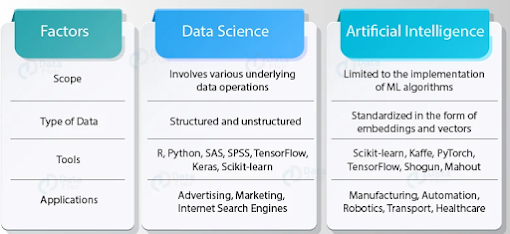
- Key Skills: Python, SQL, advanced statistics, machine learning, and data visualization tools like Tableau and PowerBI.
- Main Tasks: Data mining, statistical modeling, predictive analytics, and experiment design.
- Output: Business-ready insights, dashboards, and reports.
- Collaboration: Works closely with business analysts, stakeholders, and decision-makers.
If you enjoy uncovering stories and patterns buried in data, this may be your calling. Data science is ideal for those who are analytically curious and excel in mathematical reasoning.
What Does an AI Engineer Do?
AI Engineers focus on building, deploying, and optimizing intelligent systems that can perform tasks traditionally requiring human intelligence. Their work spans a variety of applications, including self-driving cars, chatbots, recommendation engines, and even AI-powered medical diagnostics.
- Key Skills: Deep learning, machine learning frameworks (TensorFlow, PyTorch), full-stack development, and API integration.
- Main Tasks: Building AI models, deploying them in real-world environments, and maintaining the infrastructure.
- Output: Working AI applications and systems.
- Collaboration: Partners with software developers, systems architects, and DevOps teams.
AI engineering suits people who thrive on solving complex technical problems and enjoy the challenges of software development and innovation. It’s an engineering-heavy role that lets you work on groundbreaking technology.
Where Is the Job Market Heading in 2026?
The job market for both Data Scientists and AI Engineers is thriving, but their demand patterns differ:
- Data Scientist roles are becoming more specialized, with high demand in industries like healthcare, e-commerce, and finance.
- AI Engineers are experiencing exponential growth due to advancements in generative AI and the adoption of large language models (LLMs).
- In 2026, average annual salaries for Data Scientists hover around $151,000, while AI Engineers command an average of $206,000, with some specialists earning over $300,000.
- The rise of startups utilizing AI applications has made the AI Engineer role incredibly competitive but also offers immense growth potential.
To better understand job trends, explore platforms like BuiltIn’s AI Engineer Salary Guide and Levels.fyi for Data Scientist Salaries. These tools provide real-time data on compensation trends and job market insights.
How to Choose Between Data Science and AI Engineering
Now that you know what each role entails, let’s zoom in on how to decide based on your personal goals and professional aspirations.
- If You Enjoy Problem Solving and Business Impact: Data science may be your best fit. This field is for individuals who thrive on analyzing data and communicating actionable business insights.
- If You’re a Builder at Heart: Go for AI Engineering. This is ideal if you enjoy coding, deploying systems, and creating real-world applications of AI.
- Desired Work Environment: Data Scientists usually work in teams within business-heavy environments, while AI Engineers are often part of tech-focused, innovation-driven groups.
- Learning Curve: Data Science has a steep initial learning curve due to its statistics-heavy nature, whereas AI Engineering requires a larger focus on full-stack development skills.
Your choice doesn’t have to be final! Many professionals transition between these two fields as their skills and interests evolve.
Common Mistakes to Avoid
- Choosing a career based solely on salary without considering your interests.
- Underestimating the time required to gain mastery in either field.
- Ignoring the value of soft skills, especially for Data Scientists who need to communicate insights effectively to non-technical stakeholders.
- Assuming that AI Engineers only work on cutting-edge technology. Many jobs involve systems maintenance and optimization.
My Advice?
Start by getting hands-on experience. For aspiring Data Scientists, explore platforms like Kaggle, which offers datasets and competitions to test your analytical skills. If AI Engineering excites you, build small projects using tools like OpenAI’s API or frameworks like TensorFlow.
- Use free online resources for a low-cost introduction.
- Engage with communities on LinkedIn and GitHub to network and stay inspired.
- Remember, mentorship can fast-track your learning.
The decision isn’t just about which career is “better.” It’s about which aligns with the problems you want to solve, the skills you want to develop, and the life you envision for yourself in 2026 and beyond.
FAQ on Choosing Between Data Scientist and AI Engineer Careers in 2026
What are the main differences between a Data Scientist and an AI Engineer?
A Data Scientist focuses on analyzing and interpreting data to provide actionable insights for business decisions. They use tools like Python, SQL, and Tableau to clean, model, and visualize data. On the other hand, an AI Engineer designs and implements intelligent systems, such as chatbots or recommendation engines, using frameworks like TensorFlow and PyTorch. While Data Scientists emphasize statistical analysis and business impact, AI Engineers prioritize building and deploying AI-powered applications. Explore AI Engineering Trends
Which career has a steeper learning curve?
Data Science has a steeper initial learning curve due to its reliance on advanced statistics and analytical SQL. Mastery requires time to develop intuition for data patterns and business insights. AI Engineering, however, allows faster productivity by leveraging mature APIs and frameworks like LangChain and OpenAI. While both require dedication, AI Engineering may be easier for those with strong programming skills. Learn about AI Engineering Steps
What industries are hiring Data Scientists and AI Engineers in 2026?
Data Scientists are in demand in industries like healthcare, finance, and e-commerce, where data-driven decision-making is critical. AI Engineers are sought after in tech-heavy sectors, including autonomous vehicles, generative AI startups, and AI-powered diagnostics. Both roles are integral to innovation, but AI Engineers are seeing exponential growth due to advancements in large language models (LLMs).
How do salaries compare between these two roles?
In 2026, Data Scientists earn an average annual salary of $151,000, while AI Engineers command higher salaries, averaging $206,000. Specialists in AI, particularly those skilled in generative AI and LLMs, can earn over $300,000. Salary differences reflect the growing demand for AI expertise and the complexity of the role.
What skills are essential for a Data Scientist?
Key skills for Data Scientists include Python, SQL, advanced statistics, and data visualization tools like Tableau. They must also excel in communication to present insights effectively to non-technical stakeholders. Experiment design and predictive analytics are critical for solving business problems.
What skills are essential for an AI Engineer?
AI Engineers need proficiency in deep learning frameworks like TensorFlow and PyTorch, full-stack development, and API integration. They should also understand MLOps for deploying and maintaining AI models. Familiarity with LLMs and tools like LangChain is increasingly important for building cutting-edge applications.
How can I decide which career path is right for me?
If you enjoy problem-solving and uncovering patterns in data, Data Science may be your calling. If you prefer building systems and working on innovative technology, AI Engineering is a better fit. Consider your interests in business impact versus technical innovation to make an informed decision.
Can I transition between these two fields?
Yes, transitioning between Data Science and AI Engineering is possible as both roles share foundational skills like Python and machine learning. Many professionals start in one field and move to the other as their interests and expertise evolve.
What are common mistakes to avoid when choosing a career?
Avoid choosing a career solely based on salary without considering your interests. Underestimating the time required to gain mastery and ignoring the importance of soft skills can also hinder success. For AI Engineers, assuming all work involves cutting-edge technology is a misconception, as many roles focus on system maintenance.
How can I start building skills for these careers?
For aspiring Data Scientists, platforms like Kaggle offer datasets and competitions to practice analytical skills. AI Engineers can start by building small projects using OpenAI’s API or TensorFlow. Engage with communities on LinkedIn and GitHub to network and stay inspired. Discover AI Startup Tips
About the Author
Violetta Bonenkamp, also known as MeanCEO, is an experienced startup founder with an impressive educational background including an MBA and four other higher education degrees. She has over 20 years of work experience across multiple countries, including 5 years as a solopreneur and serial entrepreneur. Throughout her startup experience she has applied for multiple startup grants at the EU level, in the Netherlands and Malta, and her startups received quite a few of those. She’s been living, studying and working in many countries around the globe and her extensive multicultural experience has influenced her immensely.
Violetta is a true multiple specialist who has built expertise in Linguistics, Education, Business Management, Blockchain, Entrepreneurship, Intellectual Property, Game Design, AI, SEO, Digital Marketing, cyber security and zero code automations. Her extensive educational journey includes a Master of Arts in Linguistics and Education, an Advanced Master in Linguistics from Belgium (2006-2007), an MBA from Blekinge Institute of Technology in Sweden (2006-2008), and an Erasmus Mundus joint program European Master of Higher Education from universities in Norway, Finland, and Portugal (2009).
She is the founder of Fe/male Switch, a startup game that encourages women to enter STEM fields, and also leads CADChain, and multiple other projects like the Directory of 1,000 Startup Cities with a proprietary MeanCEO Index that ranks cities for female entrepreneurs. Violetta created the “gamepreneurship” methodology, which forms the scientific basis of her startup game. She also builds a lot of SEO tools for startups. Her achievements include being named one of the top 100 women in Europe by EU Startups in 2022 and being nominated for Impact Person of the year at the Dutch Blockchain Week. She is an author with Sifted and a speaker at different Universities. Recently she published a book on Startup Idea Validation the right way: from zero to first customers and beyond, launched a Directory of 1,500+ websites for startups to list themselves in order to gain traction and build backlinks and is building MELA AI to help local restaurants in Malta get more visibility online.
For the past several years Violetta has been living between the Netherlands and Malta, while also regularly traveling to different destinations around the globe, usually due to her entrepreneurial activities. This has led her to start writing about different locations and amenities from the point of view of an entrepreneur. Here’s her recent article about the best hotels in Italy to work from.