


TL;DR: Transform Business Workflows with Local AI Tools in 2026
Run powerful, secure AI automation workflows locally with n8n, Model Context Protocol (MCP), and Ollama, eliminating expensive APIs and data privacy risks. These tools enable businesses to orchestrate workflows visually, enforce AI safety rules, and run large language models securely on-site.
• Use Cases: Streamline operations like data quality monitoring, compliance audits, and automated onboarding.
• Key Benefits: Enhances privacy, reduces costs, and customizes workflows without external dependencies.
• Getting Started: Install n8n, integrate an LLM with Ollama, and implement MCP governance protocols.
Start exploring localized AI workflows today to secure competitive advantages in 2026. For insights on optimizing your processes, explore tools that enhance design and CAD workflows at CADChain.
Check out other fresh news that you might like:
AI News 2026: Top GitHub Repositories for Learning AI – A Startup News Guide
Powerful Local AI Automations with n8n, MCP, and Ollama
Imagine running advanced AI-driven workflows directly on your local machine without expensive APIs or data privacy risks. As a serial entrepreneur with years of experience in deep tech and AI, I’ve seen tools evolve to cater to businesses’ increasing need for control, efficiency, and cost-effectiveness. This is where n8n, Model Context Protocol (MCP), and Ollama come into play, forming a triad of local automation that can revolutionize how businesses approach artificial intelligence in 2026.
These technologies enable businesses to bypass the limitations and risks of cloud-based platforms, such as prohibitive costs, rate limits, and sensitive data exposure. By leveraging them, companies can fully replace fragile, script-based systems with flexible, robust workflow solutions that run entirely on-premises. Here is how they work together to create impressive automations that prioritize security, cost control, and privacy.
What Are n8n, MCP, and Ollama?
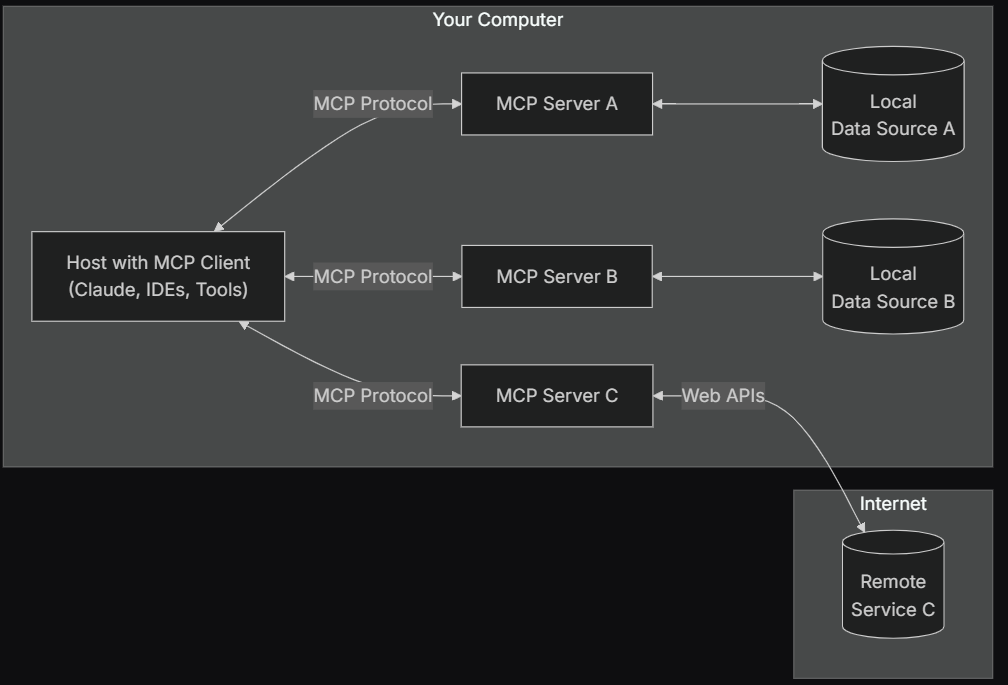
n8n is an open-source workflow automation tool that lets you visually orchestrate tasks using nodes. It’s self-hostable, making it ideal for local implementation. Model Context Protocol (MCP), on the other hand, is a governance layer that ensures AI models perform specific tasks safely by limiting their tool access. Finally, Ollama provides the ability to run large language models (LLMs) locally on consumer-grade hardware, ensuring AI processing remains secure and private.
When used together, these tools are perfect for building customized and secure workflows powered by AI, without any reliance on external platforms. Let’s explore real-world cases to see their potential.
What Can You Automate With This Technology? Examples and Use Cases
Companies across various industries are leveraging this stack in innovative ways. Below are seven common use cases that demonstrate the synergy of these tools:
- Incident Log Triage: Logs from applications are preprocessed by n8n, summarized by Ollama, and audited by MCP for accuracy before being shared with teams.
- Data Quality Monitoring: n8n detects inconsistencies in data pipelines and flags them for review using LLMs via Ollama.
- Onboarding Automation: New hires can receive dynamically created onboarding plans, with Ollama’s help, based on the specific role requirements.
- Customer Support Automation: Integrating customer service chat data and automating ticket resolution with intelligent suggestions.
- Research Summaries: Auto-generated summaries of research papers or knowledge databases for internal teams, compiled through Ollama and validated by MCP.
- Compliance Audits: Legal documents are analyzed for risks against standards while ensuring privacy through local processing.
- Code Review Automation: Git repositories are scanned for issues through comparative analysis and auto-annotations using LLMs.
How to Get Started with n8n, MCP, and Ollama
Building an AI-driven automation workflow might sound daunting, but by following these steps, you can unlock its potential:
- Install n8n: Host n8n locally or through Docker. Familiarize yourself with its node-based workflow builder.
- Integrate Ollama: Download an appropriate LLM model compatible with Ollama. Use it wherever natural language understanding is required.
- Set up MCP: Define the limits and protocols for your AI models to ensure secure, predictable behavior.
- Create your Workflow: Use n8n to design a complete automation process, connecting your tools and data sources visually.
- Test Thoroughly: Run small-scale workflows to ensure operation and refine iterative improvements as new tasks arise.
Common Mistakes to Avoid
While these tools are incredibly powerful, misuse can lead to inefficiencies or failures. Avoid these pitfalls:
- Skipping Governance: Without MCP, your workflows risk executing unexpected or unsafe operations.
- Neglecting Workflow Optimization: Overcomplicating flows can slow processes. Simplicity is critical.
- Overloading LLM Inputs: Feed only essential, preprocessed data to Ollama to avoid overburdening your model.
- Ignoring Documentation: Always maintain clear records for your workflows to ease debugging and scaling.
By staying mindful of these considerations, you can make full use of these revolutionary tools while avoiding setbacks.
Why This Matters for Entrepreneurs and CAD Firms
As someone running a business or working in a CAD firm, the efficiency of local AI automations is transformative. Projects that involve handling sensitive intellectual property or repetitive workflows benefit tremendously from this stack’s ability to run locally, ensuring both speed and security. Whether you’re optimizing design processes or automating customer service, these tools are pioneering a major shift in entrepreneurial productivity for 2026 and beyond.
Conclusion: Take Action Now
The combination of n8n, MCP, and Ollama is reshaping how businesses approach AI workflows, making them accessible, secure, and cost-effective. Whether you’re a tech-savvy startup founder or running an established CAD firm, this is the cutting edge of AI automation worth exploring.
If you’re not already experimenting with these tools, you’re missing out on a competitive advantage. Begin by identifying workflows you could automate, explore their free open-source versions, and ensure your team is comfortable with the transition.
For more on implementing these solutions and their impact on modern startups, explore this guide. Let’s make 2026 the year of smarter, localized AI!
FAQ on Powerful Local AI Automations with n8n, MCP, and Ollama
What is n8n and how does it work for local AI automation?
n8n is an open-source workflow automation tool that allows users to visually design workflows using nodes. It is self-hostable, making it ideal for local implementation. With n8n, businesses can automate tasks, integrate APIs, and manage data flows without relying on cloud-based platforms. This ensures privacy and cost control while enabling advanced AI-driven workflows. For example, n8n can preprocess data, trigger actions based on conditions, and connect with tools like Ollama for local AI processing. Learn more about n8n data automation
How does MCP ensure safe AI model usage?
Model Context Protocol (MCP) acts as a governance layer for AI models, ensuring they perform specific tasks safely by limiting their tool access. MCP allows businesses to define protocols and restrictions for AI models, preventing unauthorized operations or data exposure. For instance, MCP can restrict an AI model to only query specific databases or validate outputs against historical data. This makes MCP essential for secure and predictable AI workflows.
What makes Ollama suitable for running LLMs locally?
Ollama is designed to run large language models (LLMs) on consumer-grade hardware, enabling businesses to process AI tasks locally. This eliminates the need for expensive cloud-based APIs and ensures data privacy. Ollama supports various open-source LLMs, making it versatile for tasks like summarization, classification, and natural language understanding. Its compatibility with tools like n8n and MCP further enhances its utility in creating secure and efficient workflows.
Can these tools be used for compliance audits?
Yes, n8n, MCP, and Ollama are highly effective for compliance audits. n8n can ingest legal documents, preprocess them, and segment clauses for analysis. Ollama, guided by MCP, can compare clauses against approved standards and flag risks or deviations. This ensures that sensitive compliance tasks are handled locally, maintaining privacy and accuracy. Explore compliance automation with AI
How do these tools improve data quality monitoring?
n8n can monitor data pipelines for inconsistencies and schema drifts, flagging issues for review. Ollama, using MCP-restricted tools, can classify these issues and provide rationales for their severity. This automated approach ensures data integrity while reducing manual intervention. By running locally, businesses can maintain control over their data and avoid exposing it to external platforms.
What industries benefit most from local AI automations?
Industries handling sensitive data, such as healthcare, finance, and legal services, benefit significantly from local AI automations. These tools ensure data privacy, reduce costs, and enhance workflow efficiency. For example, CAD firms can use n8n, MCP, and Ollama to automate design processes, manage intellectual property securely, and streamline customer service. Learn more about AI in CAD
How can businesses get started with these tools?
To begin, businesses should install n8n locally or via Docker and familiarize themselves with its workflow builder. Next, they can integrate Ollama by downloading compatible LLM models and setting up MCP to define AI model protocols. Finally, businesses can design workflows in n8n, connecting tools and data sources visually. Testing and iterative improvements are crucial for successful implementation.
What are common mistakes to avoid when using these tools?
Common mistakes include skipping governance protocols with MCP, overcomplicating workflows in n8n, and overloading LLM inputs in Ollama. Businesses should also maintain clear documentation for workflows to ease debugging and scaling. By avoiding these pitfalls, organizations can maximize the efficiency and reliability of their local AI automations.
How do these tools enhance customer support automation?
n8n can integrate customer service chat data and automate ticket resolution workflows. Ollama, guided by MCP, can provide intelligent suggestions for resolving issues based on historical data. This reduces response times and improves customer satisfaction while ensuring sensitive data remains secure through local processing.
Why are local AI automations important for startups?
Local AI automations provide startups with cost-effective solutions for handling repetitive tasks and sensitive data. By using tools like n8n, MCP, and Ollama, startups can build scalable workflows without relying on expensive cloud services. This ensures privacy, reduces operational costs, and gives startups a competitive edge in their industry. Discover AI solutions for startups
About the Author
Violetta Bonenkamp, also known as MeanCEO, is an experienced startup founder with an impressive educational background including an MBA and four other higher education degrees. She has over 20 years of work experience across multiple countries, including 5 years as a solopreneur and serial entrepreneur. Throughout her startup experience she has applied for multiple startup grants at the EU level, in the Netherlands and Malta, and her startups received quite a few of those. She’s been living, studying and working in many countries around the globe and her extensive multicultural experience has influenced her immensely.
Violetta is a true multiple specialist who has built expertise in Linguistics, Education, Business Management, Blockchain, Entrepreneurship, Intellectual Property, Game Design, AI, SEO, Digital Marketing, cyber security and zero code automations. Her extensive educational journey includes a Master of Arts in Linguistics and Education, an Advanced Master in Linguistics from Belgium (2006-2007), an MBA from Blekinge Institute of Technology in Sweden (2006-2008), and an Erasmus Mundus joint program European Master of Higher Education from universities in Norway, Finland, and Portugal (2009).
She is the founder of Fe/male Switch, a startup game that encourages women to enter STEM fields, and also leads CADChain, and multiple other projects like the Directory of 1,000 Startup Cities with a proprietary MeanCEO Index that ranks cities for female entrepreneurs. Violetta created the “gamepreneurship” methodology, which forms the scientific basis of her startup game. She also builds a lot of SEO tools for startups. Her achievements include being named one of the top 100 women in Europe by EU Startups in 2022 and being nominated for Impact Person of the year at the Dutch Blockchain Week. She is an author with Sifted and a speaker at different Universities. Recently she published a book on Startup Idea Validation the right way: from zero to first customers and beyond, launched a Directory of 1,500+ websites for startups to list themselves in order to gain traction and build backlinks and is building MELA AI to help local restaurants in Malta get more visibility online.
For the past several years Violetta has been living between the Netherlands and Malta, while also regularly traveling to different destinations around the globe, usually due to her entrepreneurial activities. This has led her to start writing about different locations and amenities from the point of view of an entrepreneur. Here’s her recent article about the best hotels in Italy to work from.